
A Foundation for Persistent Scholarly Identity
Scholarly records often live across multiple platforms and formats. Over time, links break, records change, and verification becomes difficult—especially for readers, editors, and institutions trying to confirm what is authentic and citable.
SEIPID (pronounced: SEE-pid) supports stable identification and structured registry services, helping publications and journals remain consistently discoverable, verifiable, and traceable. It is designed to support long-term scholarly access without forcing users into complex workflows.
Key Features
- Persistent Identification
- Journal Registry & Profiles
- Verification Signals
- Metadata management
- Integration Ready
SEIPID Use Cases
Journal Articles & Issues
Assign persistent identifiers (like DOI) to articles and issues with structured metadata, making scholarly records reliably discoverable and citable over time.
Books, Chapters, & Theses
Register books, chapters, theses, etc. with stable identifiers to support long-term access, cataloguing, and consistent referencing across platforms.
Journal Registry & Profiles
Create a public journal registry record with a structured profile, supporting transparent presentation of journal information and registry status.
Research Outputs
Identify research outputs such as preprints, datasets, reports, and supplementary files—ensuring traceability and stable scholarly linking.
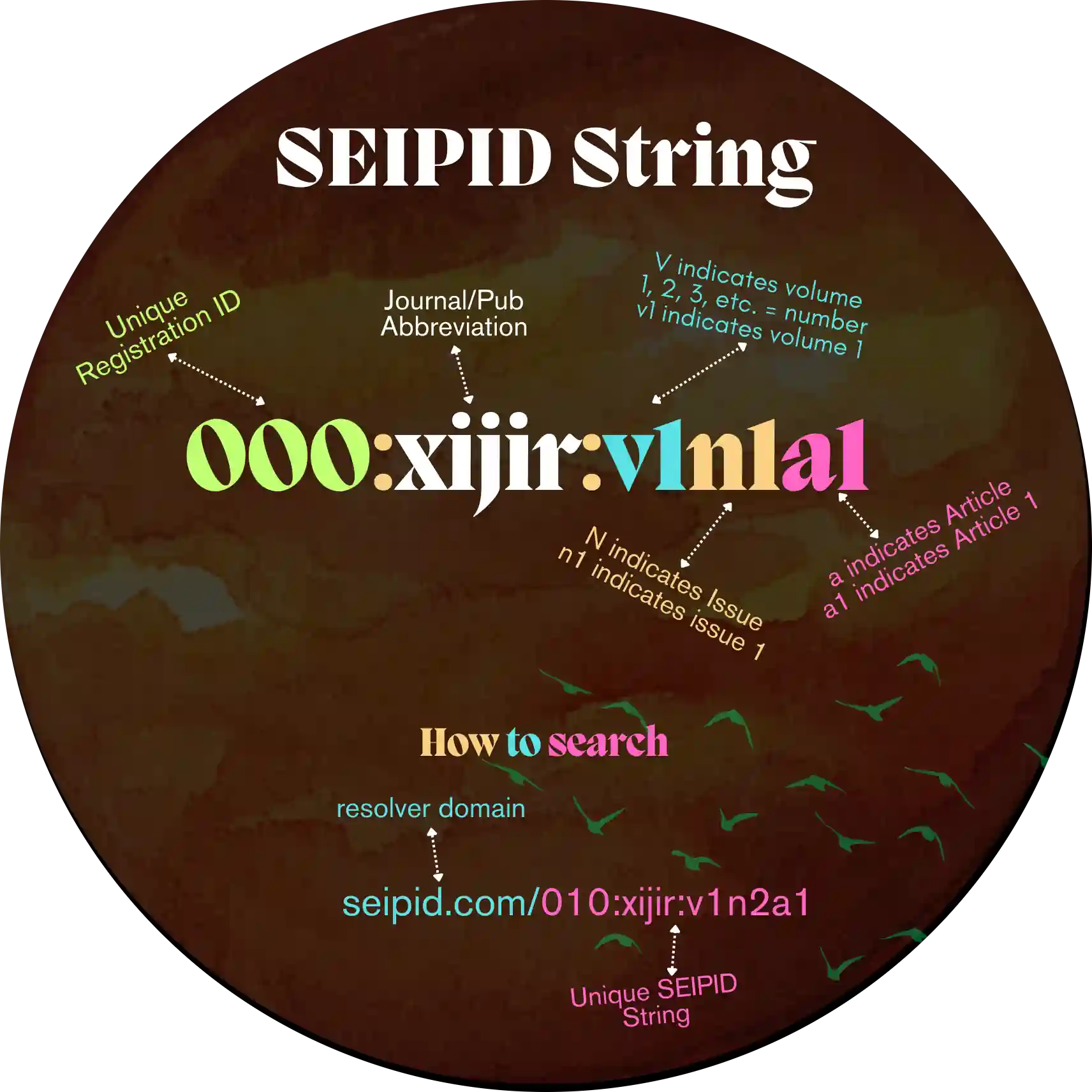
See SEIPID in Action
Each SEIPID resolves to a public record that includes essential metadata, registry status, and reliable links—so readers, editors, and institutions can quickly confirm what they’re viewing.
The record can be updated without breaking citations, while the SEIPID remains stable as a long-term reference for the scholarly item.
- Public metadata record
- Registry status & signals
- Stable resolution link
How SEIPID Works
1. Register
Submit your journal or publication details with essential metadata to create a structured registry entry.
2. Assign
SEIPID generates a unique persistent identifier and links it to a public record designed for long-term reference.
3. Resolve & Share
Use your SEIPID in citations and sharing. Anyone can resolve it anytime to view the official registry record.
SEIPID Impact Snapshot
A quick overview of platform growth.
Identifiers Assigned
Institutions
Countries
Uptime
Ready to Register with SEIPID?
Create your account and start registering journals and scholarly publications with persistent identifiers and registry records.
Create Account Contact Us