What is a SEIPID?
A persistent, metadata-linked identifier for scholarly outputs
What is a SEIPID?
A Scholarly Entity International Persistent Identifier (SEIPID) is a unique, structured digital identifier assigned to scholarly outputs to enable their consistent identification, citation, and long-term discoverability across digital environments.
Each SEIPID is linked to a metadata-based landing record that provides persistent access to the descriptive information associated with the identified object, independent of its hosting platform. This allows scholarly materials to remain identifiable and citable even if their original location changes, becomes temporarily unavailable, or is permanently removed.
SEIPIDs do not host full-text content. Instead, they function as persistent reference points that connect users to the current location of a scholarly object or to an independent metadata landing record maintained by the SEIPID infrastructure.
SEIPID Identifier Structure
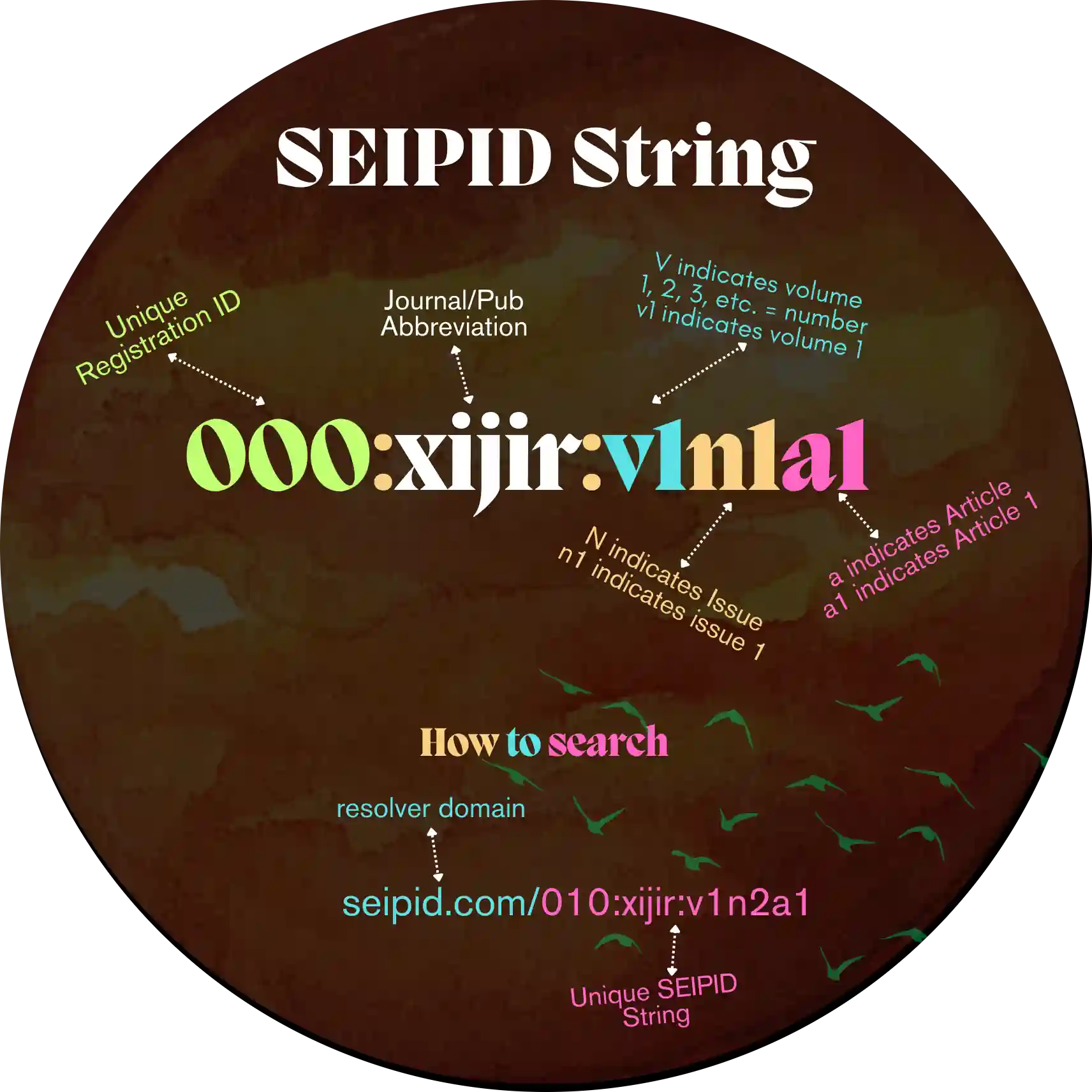
Every SEIPID follows a standard structure: [PREFIX]:[NAMESPACE]:[SUFFIX]. These three segments are separated by colons and each layer represents a different level of identification within the SEIPID system.
The Prefix: The prefix is a unique numeric code assigned to the organisation that registers SEIPIDs. This organisation may be a journal, university, repository, archive system, or publishing house. Prefixes contain only digits (minimum three digits) and ensure that each registrant has a unique identity within the SEIPID registry.
The Namespace: The namespace identifies the specific content platform or unit under the registrant. It is usually a short abbreviation chosen by the registrant. Different types of scholarly environments are represented through structured abbreviations:
-
Journal platforms: represented only by the journal abbreviation.
Example:
xijir(Xpertno International Journal of Interdisciplinary Research). -
Institutional repositories: identified using the institution abbreviation followed by
-ir. Example:pu-ir(Punjab University – Institutional Repository). -
Archiving systems: preservation or archival systems are indicated using
-arch. Example:xrc-arch(XRC-Archival unit or archive system). -
Publishers: organisations that publish books or monographs use the publisher abbreviation followed by
-p. Example:pl-p(Publibre(PL)-Press/Publisher).
This namespace system allows SEIPID identifiers to clearly distinguish between journals, repositories, archives, and publishing units while remaining short and human-readable.
The Suffix: The suffix identifies the exact scholarly object within the namespace. It is assigned by the registrant according to internal numbering or versioning rules.
-
Journal articles:
v1n1a1(Volume 1, Issue 1, Article 1) -
Full books:
b1e1c0(Book 1, Edition 1, Chapter 0 — representing the entire book) -
Book chapters:
b1e1c1(Book 1, Edition 1, Chapter 1) -
Theses:
phd2025-001(PhD thesis, year, sequence number) -
Conference papers:
conf23-02-42(Conference year, event number, paper number) -
Conference abstract books:
conf23-02-fabsb(Conference year, event number, full abstract book) -
Datasets:
ds-v2-003(Dataset, version 2, item 3)
SEIPIDs remain scalable and readable even as millions of scholarly objects are registered because the structure separates the registrant, namespace, and item into distinct layers of identification.
Each identifier can be resolved through the SEIPID resolver. For example: https://seipid.com/010:xijir:v2n3a1 will resolve to the current landing record for that scholarly object, or to a SEIPID-hosted metadata page when needed.
What Makes SEIPID Different
The philosophy and infrastructure that give SEIPID its strength.
Structured, Layered Identifier
Persistence Through Metadata Fallback
Accessibility-Oriented Infrastructure
Metadata-Linked Registry Records
Built for Growth
Example: SEIPID in Action
Each SEIPID resolves through the SEIPID registry to an associated landing record containing structured metadata and current access information for the identified scholarly object.
The landing record may direct users to the current hosting location or provide a registry-maintained metadata page if the original source becomes unavailable. The SEIPID itself remains stable as a persistent reference, even if access details are updated over time.
- Public metadata landing record
- Registry verification status
- Stable resolution link
Want to work with SEIPID?
Explore plans, request institutional onboarding, or explore integration options through our documentation.